
Sensory science and methodology

What Is Sensory Research? – and Why It Still Outperforms Gut Feel in 2026

In a world of AI dashboards, predictive analytics, and lightning-fast trend cycles, you might assume product decisions are smarter than ever.

Yet, in 2026, one truth still holds: products win or lose based on how they taste, smell, feel, look, and sound to real people. That’s where sensory research comes in.

Sensory research is the scientific measurement and analysis of how consumers perceive products through their senses. It applies structured testing methods to evaluate attributes such as flavour intensity, texture, aroma, sweetness, bitterness, appearance, and even packaging sound.

Why “Gut Feel” Isn’t Enough

Product developers and brand managers often have years of experience. They know their category. They trust their instincts. But human bias is powerful.

Internal teams:

· Are often too close to the product
· Adapt quickly to small formulation changes
· May overvalue technical improvements consumers can’t perceive
· Often reflects a narrow demographic

Consumers, on the other hand, don’t evaluate products through expertise. They evaluate through experience. If a reformulated snack is 3% less salty but 15% less enjoyable, the market will notice – even if the R&D team doesn’t. Sensory research bridges that gap by replacing assumption with evidence.

What Sensory Research Actually Measures
Modern sensory methodology goes far beyond asking “Do you like it?”

It can measure:
· Attribute intensity
· Preference ranking
· Discrimination between samples
· Emotional response
· Purchase intent
· Perceptual mapping versus competitors

The goal isn’t just to find the best-tasting product. It’s to understand why a product performs the way it does – and how it compares to benchmarks.

Central Location Testing (CLT): Controlled Precision
One of the most widely used methods is Central Location Testing (CLT).

In a CLT, participants are invited to a dedicated facility to evaluate products under controlled conditions. Each sample is coded, presented in a standardised way, and assessed individually – often inside sensory booths that minimise distraction and bias.

CLTs are particularly powerful when:
· Comparing multiple prototypes
· Benchmarking against competitors
· Making go/no-go launch decisions
· Validating reformulations

Because the environment is controlled, data variability is reduced – leading to clearer, statistically significant results.

Home Use Testing (HUT): Real-World Relevance
By contrast, Home Use Testing (HUT) places products in participants’ homes for several days or weeks.

This method captures:
· Natural consumption behaviour
· Contextual usage
· Repeat purchase intent
· Household-level feedback

HUT is especially useful for products where experience evolves over time – such as beverages, meal kits, skincare, or household goods.
While HUT offers ecological validity, it introduces more variability. That’s why many companies use both CLT and HUT strategically, depending on the development stage.

Quant vs Qual: Numbers and Stories
Sensory research also combines quantitative and qualitative approaches.

Quantitative methods provide statistical confidence. You can say with certainty that Sample B outperforms Sample A at the 95% confidence level.

Qualitative methods uncover meaning. Why does Sample A feel “cheap”? What does “too artificial” really signal? What emotional associations are driving rejection?
Numbers tell you what is happening. Stories tell you why.
The most effective sensory programs integrate both.

Why Sensory Science Still Wins in 2026
Despite advances in predictive modelling, digital twins, and consumer trend analytics, no algorithm can fully replicate human perception.
People don’t buy formulations. They buy experiences. Sensory research ensures that the experience you designed in the lab survives real-world judgment.

In an era of compressed product lifecycles and fierce competition, structured sensory methodology isn’t a luxury – it’s risk insurance.
And compared to gut feel? It’s still the smarter bet.

If you have a question about anything we’ve discussed in this article, or, would simply like more information about what we do and how we work, head over to our contact page now, we’d love to hear from you.


Pet food and pet care insight

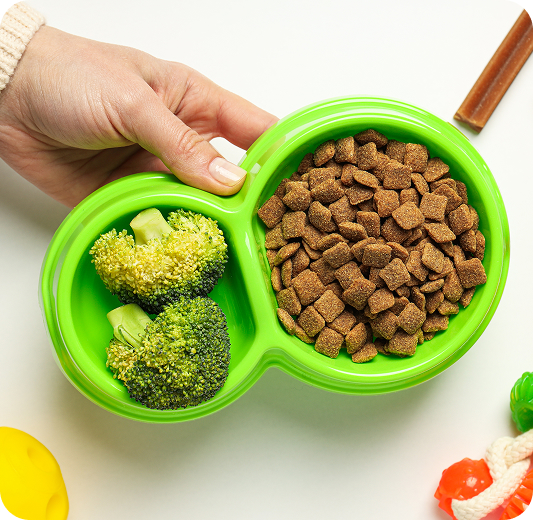
Why Sensory Science Is the Missing Link in Pet Product Success In the rapidly evolving world of pet care, success depends on more than nutrition claims or attractive packaging. Today’s pet food brands must satisfy two decision-makers: the pet and the owner. At the centre of that balancing act sits sensory science – and it’s redefining how smart brands reduce risk, drive premiumisation, and build loyalty. At Wirral Sensory Services, pet-care sensory research is not an afterthought. It’s a commercial tool. What “Palatability” Really Means in Pet Food Testing Palatability is often simplified to “does the pet eat it?” In reality, it’s far more nuanced. True palatability measurement examines:
  • First approach and sniff response
  • Speed of consumption
  • Preference in two-bowl palatability testing
  • Total intake
  • Repeat acceptance over time
A dog finishing a bowl once doesn’t guarantee long-term success. Sustained preference, feeding enthusiasm, and behavioural cues provide deeper insight. Cats, notoriously selective, require even tighter methodology. Small changes in fat coating, digestion, aroma release, or kibble density can shift acceptance dramatically. Palatability testing must be controlled, repeatable, and statistically analysed – otherwise brands risk misinterpreting normal feeding behaviour as genuine preference. Why Pet Owner Perception Often Drives the Sale While the pet consumes the product, the owner purchases it. Research consistently shows that owner perception influences purchasing decisions more strongly than measurable palatability differences – unless those differences are extreme. Owners evaluate:
  • Ingredient recognisability
  • Packaging cues
  • Appearance and colour
  • Smell of the food
  • Perceived “freshness”
  • Texture of wet food
If a dry kibble smells unpleasant to a human – even if the dog loves it – repurchase is unlikely. Sensory testing therefore must incorporate both:
  1. Animal palatability studies
  2. Human sensory and perceptual research
Ignoring either side creates blind spots in commercial performance. The Humanisation of Pet Food The “humanisation” trend continues to reshape pet categories. Owners increasingly expect pet food to resemble human food standards – be it visually, aromatically, or, emotionally. Sensory research shows that:
  • Visible inclusions (vegetable pieces, identifiable proteins) increase perceived quality
  • Glossy gravies signal indulgence
  • Natural colour variation can enhance trust
  • An overly uniform appearance may reduce authenticity perception
Interestingly, what signals “premium” to humans does not always align with what drives pet preference. This is where structured testing prevents costly missteps. Premium cues must appeal to the owner without compromising palatability for the animal. Testing Treats vs Complete Diets: Methodology Matters Not all pet food testing should be treated equally.  Treats are:
  • Consumed occasionally
  • Evaluated for excitement response
  • Often indulgent
Complete diets are:
  • Consumed daily
  • Evaluated for long-term acceptance
  • Sensitive to monotony effects
  • More vulnerable to subtle formulation changes
Treat testing may prioritise immediate attraction and enthusiasm. Complete diet testing requires longer study periods and intake monitoring to ensure sustained feeding performance. Using the wrong methodology for the wrong product type can produce misleading conclusions – particularly when predicting repeat purchase behaviour.  Supporting Premiumisation Through Sensory Evidence Premiumisation in pet food is accelerating, with brands commanding higher price points through quality cues, specialist claims, and differentiated formats. Sensory testing supports premium positioning by:
  • Benchmarking against leading premium competitors
  • Validating improved aroma or texture claims
  • Identifying sensory attributes that justify higher price tiers
  • Preventing cost-driven reformulations from eroding perceived quality
Small ingredient substitutions to reduce cost can significantly alter aroma volatility or mouthfeel. Without sensory validation, brands may unknowingly dilute their premium proposition. Why Texture Matters as Much as Taste Texture is often underestimated in pet food acceptance. For example, for dogs:
  • Kibble hardness affects crunch satisfaction
  • Moisture levels influence chew time
  • Structural integrity impacts feeding experience
And these are just a few examples. From the owner’s perspective, texture also signals quality. Chunk definition, gravy viscosity, and pâté smoothness all contribute to perceived value. Sensory analysis measures these attributes objectively – ensuring texture supports both acceptance and premium positioning. At Wirral Sensory Services, pet-care sensory methodology goes beyond basic feeding trials. It delivers commercial clarity – reducing risk, accelerating confident launches, and protecting brand equity in an increasingly competitive category. Because in pet care, success isn’t just about what’s inside the bowl. It’s about how it’s experienced – by both ends of the lead. For more information, get in touch with a member of our dedicated team here.

No Time to ‘Paws’ – Keeping Pet Food Product Development Moving

Why Sensory & Consumer Insight Is the Missing Link in Confident Pet Food Growth

The pet food market has never been more competitive or more emotionally charged.

Pet parents are scrutinising ingredients, questioning claims, comparing formats and expecting products that deliver on nutrition and enjoyment. At the same time, brands are under pressure to innovate faster, justify price points and stand out in increasingly crowded categories.

Yet one challenge persists across the sector:

Too many pet food decisions are still driven by assumption rather than evidence.

The Hidden Cost of Assumptions in Pet Food Development

In pet food, “we think it’s OK, I’m sure pets will like it” just isn’t good enough.

Products fail not because they are unsafe or poorly formulated, but because:

· Pets don’t consistently accept them

· Owners don’t perceive sufficient value

· Claims don’t resonate or can’t be substantiated

· The product doesn’t clearly outperform competitors

When that happens, the cost goes far beyond slow sales:

· Reformulation and re-testing

· Packaging and messaging changes

· Lost retailer confidence

· Missed trust with pet owners

The most expensive mistake a pet brand can make is launching without truly understanding both the pet and the pet parents.

Sensory Insight vs Consumer Insight: Why Pet Food Needs Both

One of the biggest misunderstandings in pet food research is assuming that acceptance equals success.

It doesn’t.

· Sensory insight helps you understand how a product performs on attributes such as aroma, appearance, texture, crunch, or mouthfeel, often assessed via trained panels or structured methodologies.

· Consumer insight tells you how pet owners perceive, choose and repurchase and how those perceptions influence trust and loyalty.

In pet food, success sits at the intersection of:

· Pet response

· Owner belief

· Emotional reassurance

When these insights are connected, brands can:

· Identify what genuinely drives acceptance and preference

· Understand trade-offs between health, indulgence and enjoyment

· Optimise recipes without undermining trust or claims

Claims in Pet Food: Powerful but will come under Scrutiny

“Highly palatable.” “100% Organic – Grain Free” “Loved by 8 out of 10 dogs.” “Healthier without compromise – Nothing Artificial”

These statements matter, especially in pet food, where trust is everything.

But today’s market demands:

· Robust competitive benchmarking

· Transparent methodologies

· Defensible evidence behind performance claims

Retailers, regulators and increasingly informed pet owners expect proof, not promises.

Insight is no longer just about learning – It’s about credibility and protection.

Why Early Insight Creates Better Pet Food Innovation

The most confident pet brands don’t wait until launch to listen.

They use early-stage sensory and consumer insight to:

· Screen concepts before full development

· Optimise recipes early, not reactively

· Compare against real competitors—not internal benchmarks

· Make braver, faster decisions on what to progress or pause

Early insight doesn’t slow innovation in pet food.

It reduces waste, shortens development cycles, and improves success rates.

Putting Insight at the Heart of Pet Food Strategy

Insight should not be a final hurdle.

It should inform:

· Go / no-go decisions

· Range renovation vs new innovation

· Format and flavour expansion

· Premiumisation and value positioning

When used properly, sensory and consumer research becomes a commercial growth tool, not a cost line.

The pet food brands winning today aren’t guessing what pets and owners want.

They’re listening earlier and acting with confidence.

A Final Thought

If you’re making big decisions about formulation, palatability, claims or renovation this year, the question isn’t:

“Do we need more research?”

It’s:

“Do we truly understand what drives acceptance, trust and repeat purchase?”

At Wirral Sensory Services, we help pet food brands turn sensory and consumer insight into confident, evidence-based decisions, reducing risk and strengthening performance in market.

Optimising your product without losing flavour

There isn’t a brand in the world that doesn’t want to improve its products. That could mean making them healthier, cheaper, more sustainable, or in some cases, compliant with new regulations. The challenge is, making the necessary changes, without losing the taste consumers love – and that’s where product optimisation comes in. At Wirral Sensory Services (WSS), product optimisation is at the heart of what we do, helping food and drink companies adjust, reformulate, and innovate with confidence. In more detail: what is product optimisation? To keep things simple, product optimisation means refining a recipe, formulation, or process, in order to achieve the best balance between taste, texture, cost, and performance. This is necessary because sometimes brands need to:
  • Reduce sugar, salt, or fat content
  • Replace ingredients due to supply chain changes
  • Meet new sustainability targets
  • Improve nutritional profiles
  • Cut costs without hurting quality
It does come with potential problems though, because even a small tweak can dramatically change how a product feels or tastes. That’s why we use sensory and consumer research to ensure every change still meets customer expectations. Why optimisation matters more than ever Product optimisation is far more important than people realise, because of the following.
  1. Consumer health trends
Today’s shoppers demand healthier options – but they still expect great flavour. Reformulating to lower sugar or salt can make sense nutritionally, but only if the end product still tastes the same standard.
  1. Cost pressures
Rising ingredient and production costs mean brands must be efficient. Product optimisation allows you to identify the most cost-effective formulation that consumers still prefer.
  1. Sustainability goals
Many companies are shifting to more sustainable or locally sourced ingredients. Sensory testing ensures these swaps don’t compromise on quality or taste.
  1. Regulatory requirements
New government policies on sugar, salt, and additives are reshaping the market. Testing helps ensure compliance and continued consumer satisfaction. How WSS helps brands optimise products WSS’s expert team uses a blend of sensory science and real-world consumer testing to guide every stage of product refinement. For example, here’s how a typical optimisation project might unfold:
  1. Define the challenge WSS begins by understanding your goals: Is it about reducing calories, cutting cost, or matching a competitor’s flavour?
  2. Design the experiment We help develop several potential formulations – for example, five versions of a drink with varying sweetness levels.
  3. Conduct sensory evaluation Panels of trained assessors and/or target consumers taste each version under controlled conditions. They rate aspects like sweetness, texture, aroma, aftertaste, and overall liking.
  4. Analyse the data Advanced statistical analysis identifies which attributes drive preference – and which can be safely adjusted without hurting acceptance.
  5. Deliver clear recommendations You’ll receive an easy-to-understand report showing which version consumers prefer and why, along with actionable advice for product launch or reformulation. The result? Data-backed confidence that your optimised product delivers the same (or better) experience as before.
Small changes can often lead to a big impact Optimisation isn’t always about major reformulation. Sometimes it’s as simple as adjusting cooking time or temperature, switching to a different supplier or changing packaging materials that affect shelf-life or freshness. Even minor adjustments can affect aroma, mouthfeel, or perceived sweetness. WSS helps detect and manage those subtle differences before your consumers do. With over 25 years of experience in sensory and consumer science, our team works with major retailers, food manufacturers, and brands across the UK and beyond. Remember! Optimising a recipe doesn’t have to mean compromising flavour. With the right research and sensory insights, your brand can create products that meet modern demands, without losing the magic that makes customers come back. If you have a question about anything we’ve mentioned in this article or require further information, head over to our site here, or give a member of our team a call (0)151 346 2999.

Understanding the process: benefits of sensory science

Have you ever taken a moment in your busy schedule to consider why some products become instant favourites, while others, barely make it off the shelf?

Well, that’s it’s not down to luck, it’s down to sensory science.

Behind every mouth-watering sauce, perfectly balanced soft drink, or satisfying snack, lies a story and sensory testing – which is essentially the art and science of understanding how people experience flavour, aroma, and texture.

It’s where at Wirral Sensory Services (WSS), this process has been perfected over decades, to help food and drink brands create products people genuinely love.

But, what exactly is sensory testing?

Sensory testing is all about people and measuring human perception. It’s about how we taste, smell, see, and feel products. It turns subjective experiences into objective and measurable insights.

At WSS, we use trained sensory panels and real consumers to evaluate products under controlled conditions. The goal? To identify what works, what doesn’t, and why.

This kind of testing goes far beyond a casual taste test. It’s a structured evaluation process that blends science, psychology, and consumer behaviour.

Why does sensory testing matter for your food or drink brand?

Well, there are numerous reasons. For example:

1. It reduces guesswork

Instead of relying on instinct or internal opinion, sensory testing gives you clear data about what consumers actually prefer. Whether you’re developing a new recipe or adjusting an existing one, you’ll know which version performs best.

2. It guards brand reputation

Every small change in ingredient or supplier can alter flavour or texture. WSS helps ensure your customers won’t notice – or better yet, that they’ll love your product even more.

3. It supports product launch success

Launching a new flavour? Testing it first with real consumers at Wirral Sensory Services’ head office, means that you can refine it before investing in full production.

4. Helping you provide a competitive edge

Through benchmarking, WSS compares your products against competitors, so that you know exactly how you stand out, or where you might be able to improve.

Step by step: the WSS sensory testing process 

So, how does this process really work then? Here’s how a typical WSS sensory study might unfold:

1. Define the objective Every project starts with a clear goal: are you testing overall liking? Comparing reformulations? Or even, evaluating packaging impact on taste perception?

2. Design the test WSS experts choose the right sensory method. From blind taste tests to descriptive profiling. They determine sample sizes, randomisation, and evaluation protocols to ensure reliability.

3. Recruit the right panel Depending on the study, panels may include trained assessors or target consumers.

4. Running the sessions Samples are served in controlled sensory booths, free from distractions, odours, and branding. Participants will then rate your product on factors like appearance, aroma, flavour and aftertaste.

5. Data analysis Using advanced statistical tools, WSS identifies significant differences and trends. For example, you’ll learn which formulation drives liking or whether consumers notice your recipe change.

6. Deliver actionable insights WSS will provide a clear, visual report with recommendations you can use immediately, whether that’s choosing the best formula or refining marketing claims.

Many people assume that sensory research is only for global giants, but it’s also known to be hugely beneficial to small and medium-sized food companies as well.

Whether you’re a start-up, or a regional producer scaling up, Wirral Sensory Services offers flexible testing options that fit your budget and goals. Even one well-planned test can save thousands in wasted production or unsuccessful launches.

Why Wirral Sensory Services (WSS)?

WSS has been helping food and drink brands since 1997, combining scientific rigour with a personal, hands-on approach. Our clients include major supermarkets and innovative start-ups alike.

At the heart of every great-tasting product lies great insight, and sensory testing helps brands understand what consumers feel, think, and prefer – before products ever hit the shelves.

Whether you’re launching something new or refining an existing favourite, Wirral Sensory Services can help you uncover the secret ingredients to success.

If you have a question about anything we’ve mentioned in this article or require further information, head over to our contact us page, or give a member of our team a call (0)151 346 2999.